
The SellersNest blog
Seller Guides & Fee Breakdowns
Plain explanations of what selling online actually costs, with the calculator that answers each one.

Customer Lifetime Value: How Ecommerce Sellers Calculate CLV
Learn how to calculate ecommerce customer lifetime value, compare CLV with acquisition cost, and increase repeat purchases without hurting profit.
Contribution Margin: What Each Ecommerce Order Really Earns
Learn how to calculate ecommerce contribution margin, include the right variable costs, find break-even volume and make better pricing decisions.
Safety Stock Formula: How Online Sellers Avoid Stockouts
Learn how to calculate safety stock using demand and supplier lead time, set a better reorder point and avoid excess ecommerce inventory.
Inventory Turnover Ratio: How Online Sellers Find Slow Stock
Learn how to calculate inventory turnover, convert it to days of stock, identify slow SKUs and improve reordering without causing stockouts.
Break-Even Point for Online Sellers: Formula and Examples
Calculate your ecommerce break-even point using fixed costs and contribution margin. Includes formulas, examples, discounts, returns and target profit.
Landed Cost Formula: Calculate the True Cost of Imported Products
Learn how to calculate landed cost per unit, including freight, duties, customs, insurance and handling, before setting a profitable selling price.
Ecommerce Return Rate: How to Calculate It and Reduce Avoidable Returns
Learn how to calculate ecommerce return rate, measure the real cost of refunds, find avoidable causes and reduce returns with better listings and packaging.
How to Create SKU Numbers for Inventory Without Making a Mess
Learn how to create a simple SKU system for ecommerce inventory, product variations, spreadsheets, stocktakes and reorder decisions.
Ecommerce Conversion Rate: How to Calculate and Improve It
Learn how to calculate ecommerce conversion rate and improve product pages with better images, trust signals, shipping details and profitable pricing.
Customer Acquisition Cost: How Online Sellers Know If Marketing Pays
Learn how to calculate customer acquisition cost, compare CAC with profit and lifetime value, and decide whether your ecommerce marketing is sustainable.
Average Order Value: How Online Sellers Can Increase Basket Size
Learn how to calculate average order value and increase ecommerce basket size with bundles, add-ons, shipping thresholds and profitable offers.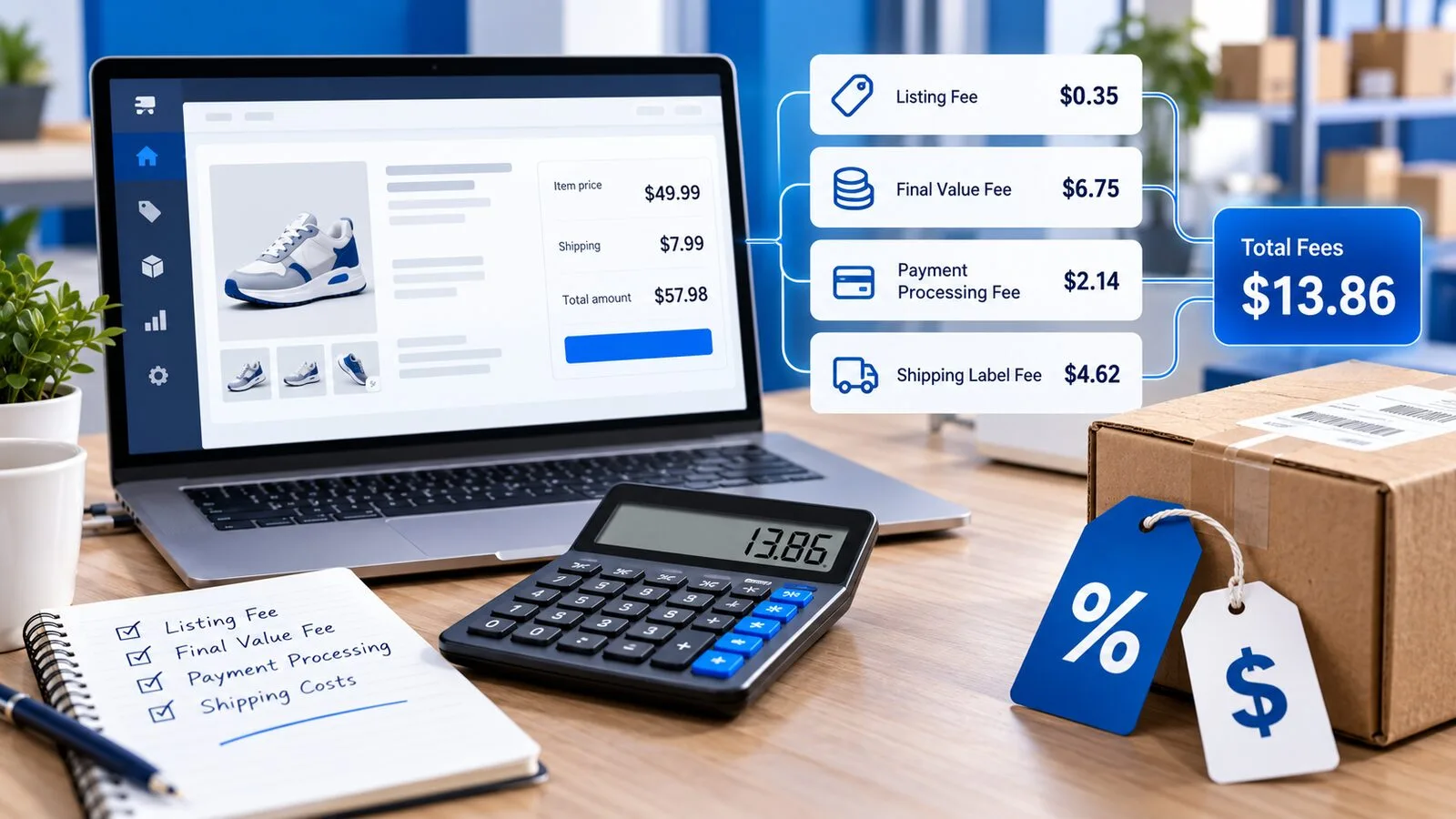
eBay Seller Fees Explained: What eBay Actually Takes
Most eBay sellers pay a final value fee of about 13.6 percent of the total sale plus a per-order charge of 30 to 40 cents. Across categories the rate ranges…
The $800 De Minimis Exemption Is Gone: What It Changes for Your Pricing
The United States has ended the $800 de minimis exemption, so packages arriving from outside the US now clear customs with real duties attached. The…
Markup vs Margin: The Difference That Quietly Costs Sellers Money
Markup measures profit against your cost. Margin measures profit against your selling price. A $10 item sold for $15 carries a 50 percent markup but only a…
How to Price Handmade Products Without Working for Free
Price handmade products by adding materials, your labour at a real hourly rate, and overhead, then applying a markup. Most makers skip the labour line…
Amazon FBA Fees Explained: When FBA Is Worth It and When It Is Not
Amazon FBA costs you a referral fee, usually around 15 percent of the sale price, plus a fulfilment fee based on the item's size and weight. Below roughly…
What Is ACoS? Break-Even ACoS Explained for Amazon Sellers
ACoS is advertising cost of sale: your ad spend divided by the revenue those ads produced. There is no universally good ACoS. What matters is whether yours…
Why Your Shipping Costs More Than the Item Weighs
Carriers charge for the space a parcel occupies as well as its weight. Multiply length by width by height, divide by the carrier's DIM divisor, and if that…
How Deep Can You Discount Before You Lose Money?
The largest discount you can afford is equal to your profit margin. If you keep 35 percent of each sale after all costs, a 35 percent discount takes you to…
Print on Demand Profit Margins: The Real Numbers
Print-on-demand margins are thin because base cost plus supplier shipping typically takes 60 to 70 percent of a normal selling price before marketplace and…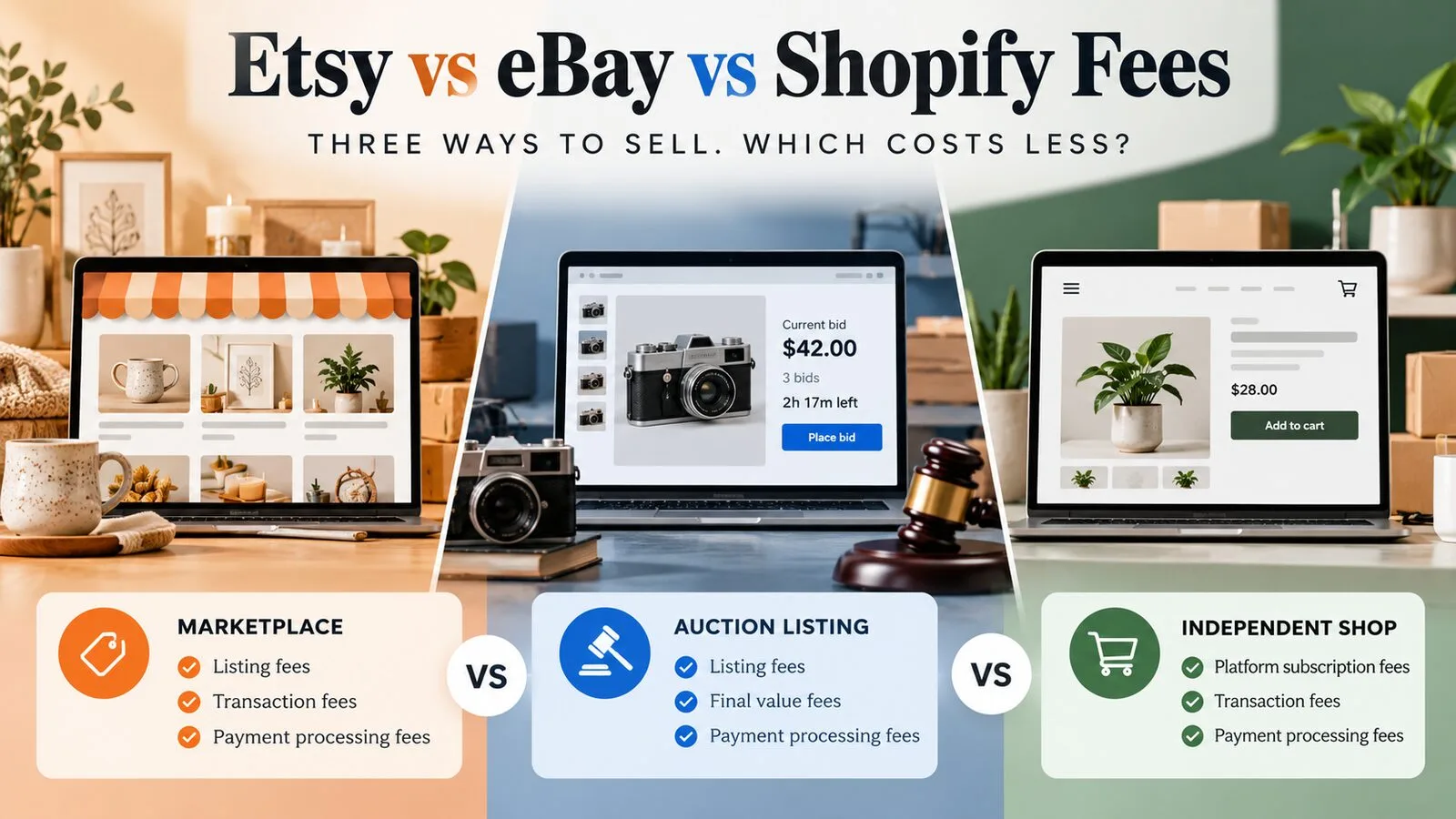
Etsy vs eBay vs Shopify: Which Actually Costs Less to Sell On?
Etsy takes roughly 11 to 15 percent of an order before ads, eBay around 12 to 16 percent, and Shopify charges no commission but bills a monthly subscription…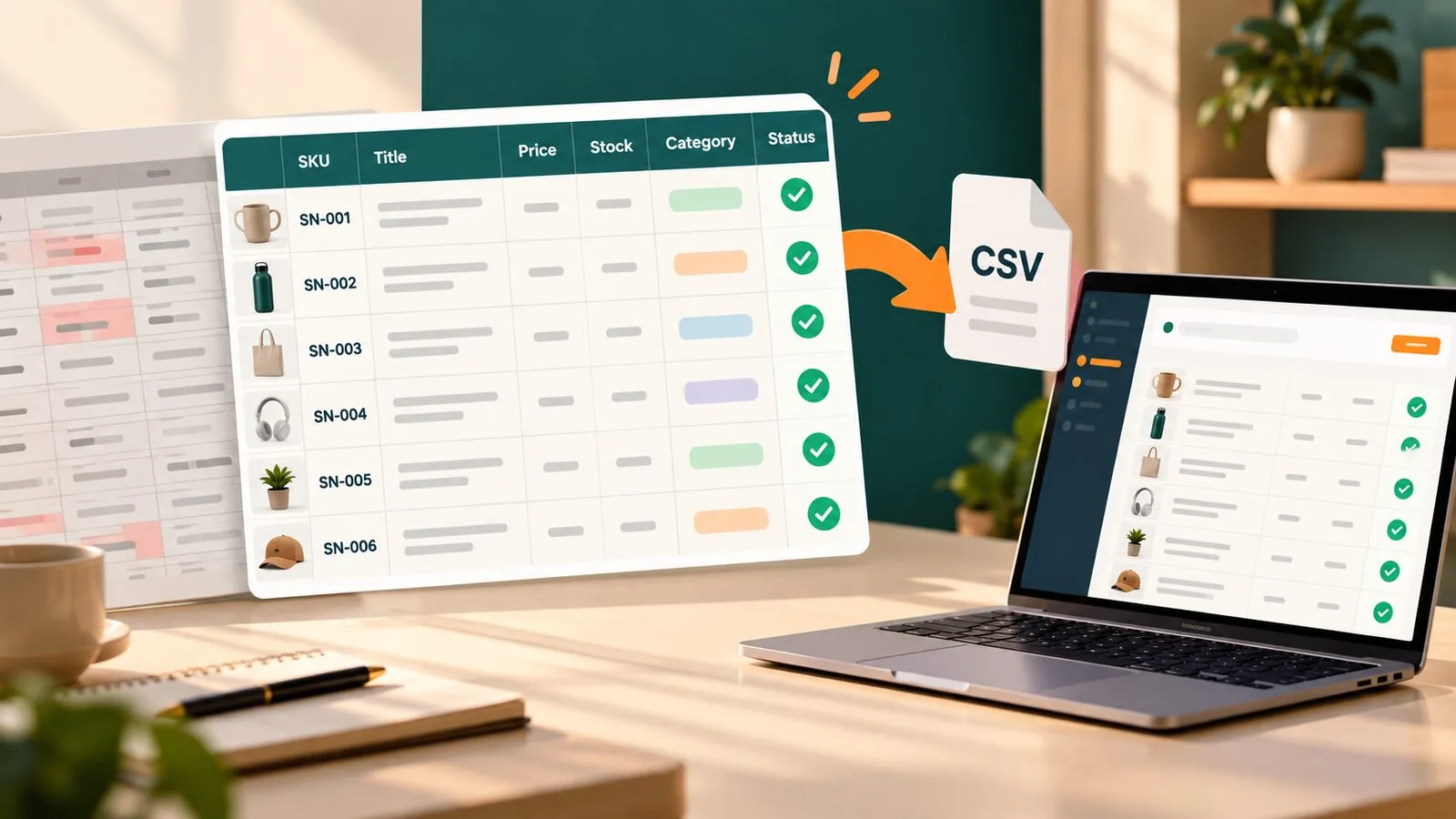
What Is a Good Profit Margin for an Online Seller?
Most healthy small ecommerce businesses run a net margin between 10 and 20 percent, with handmade and niche products often higher and resale or dropshipping…
Etsy's AI Disclosure Rules: What Sellers Must Do Now
Etsy began enforcing a generative AI disclosure requirement on 14 January 2026. If you used AI to create a listing image, description, mockup or design, you…
Depop vs Poshmark vs Mercari: Which Resale App Pays You Most?
On a $35 sale, Poshmark's 20 percent commission takes about $7, Depop's roughly 10 percent marketplace fee plus payment processing takes close to $5, and…
PayPal Fees for Sellers: What You Actually Receive
PayPal typically takes around 3.49 percent plus a fixed fee on commercial transactions in the US, with different rates for international payments and…
Shopify Fees Explained: Subscription, Processing and the Break-Even Point
Shopify charges no sales commission. You pay a monthly subscription plus payment processing of roughly 2.9 percent and $0.30 per order on the entry plan…
Sales Tax for Online Sellers: A Practical Starting Point
In most US states, marketplace facilitator laws mean Etsy, eBay and Amazon collect and remit sales tax on your behalf. Selling through your own store is…
How to Never Run Out of Stock (or Drown in It)
Your reorder point is daily sales multiplied by supplier lead time, plus a safety buffer. Sell eight units a day with a 14-day lead time and a week of…
Etsy SEO: Writing Titles and Tags That Actually Rank
Etsy search reads your title, tags, categories and attributes together. The strongest titles put the most specific buyer phrase first, avoid repeating the…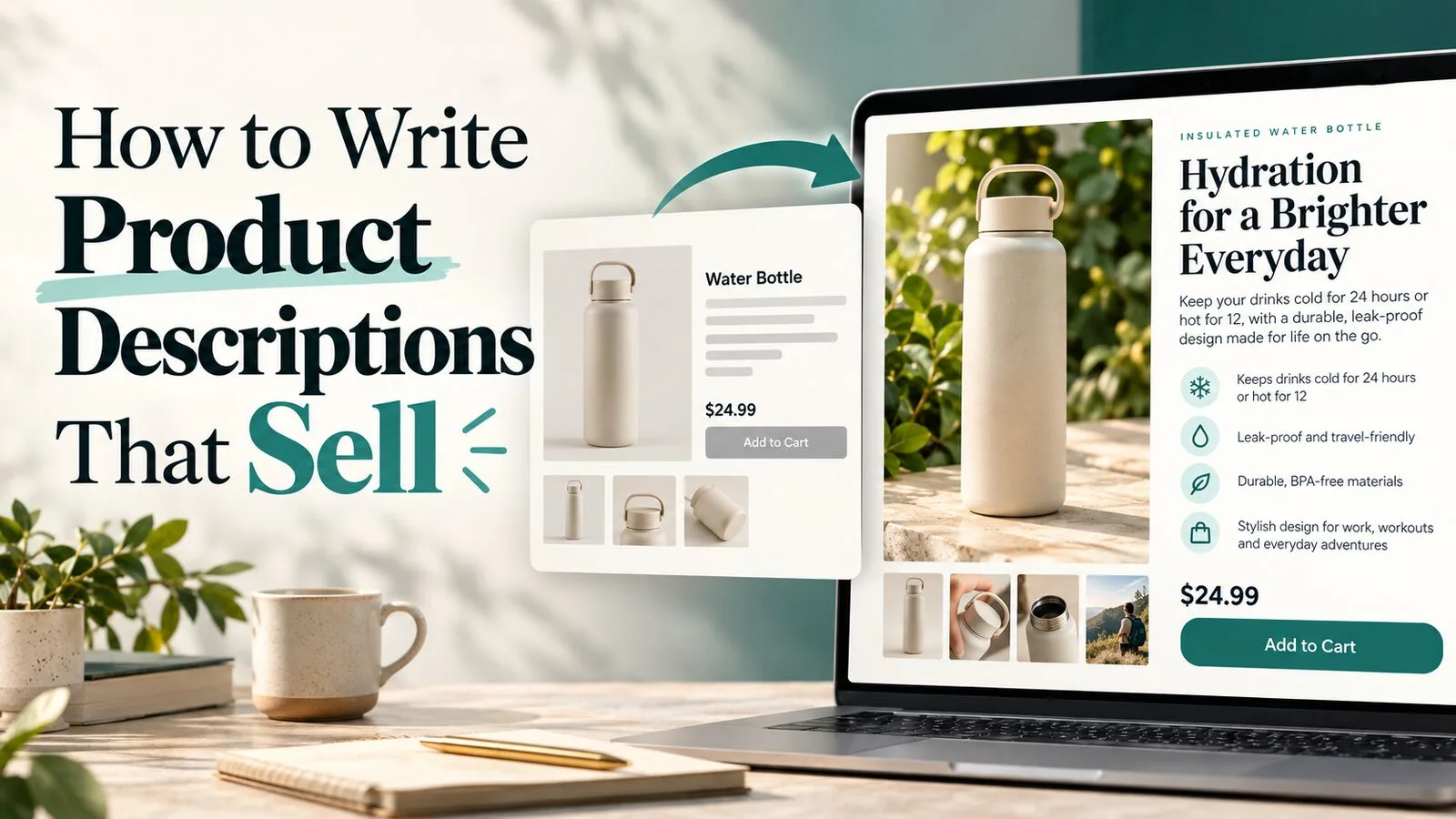
How to Write Product Descriptions That Sell
A description that converts answers three things fast: what the item is, who it suits, and what happens after they buy. Buyers skim, so the first two lines…
How to Respond to a Bad Review Without Making It Worse
Reply briefly, acknowledge the specific problem, say what you will do, and move the conversation to a private channel. Your reply is not for the reviewer…
Product Image Sizes for Every Marketplace
Most marketplaces want a square image of at least 1000 by 1000 pixels, with Etsy favouring landscape for the first photo and Amazon requiring the product to…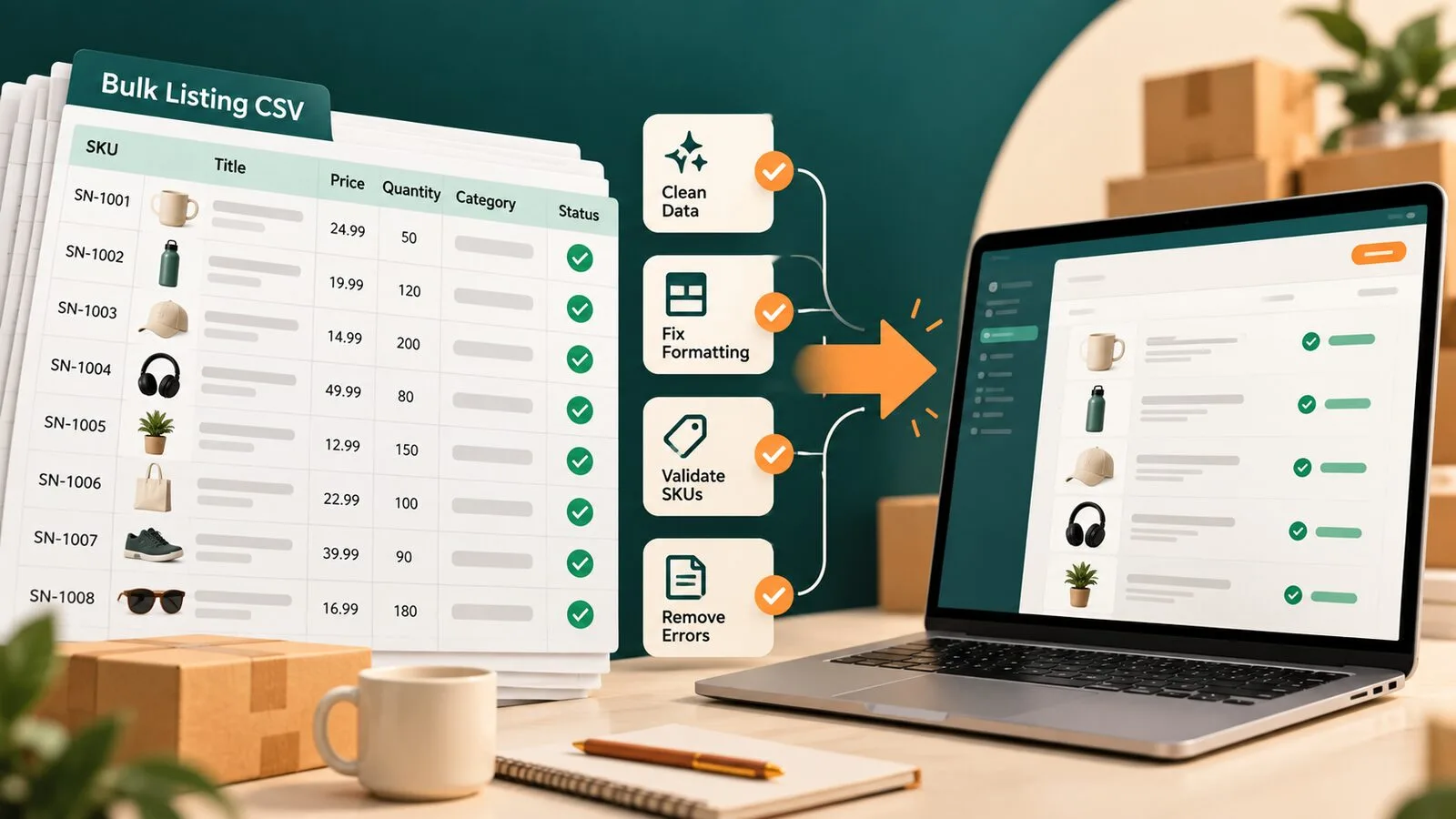
Bulk Listing: How to Clean a CSV Before You Import It
Most failed bulk uploads come from four things: stray whitespace, duplicate SKUs, inconsistent column headers, and numbers stored as text. Fixing them…